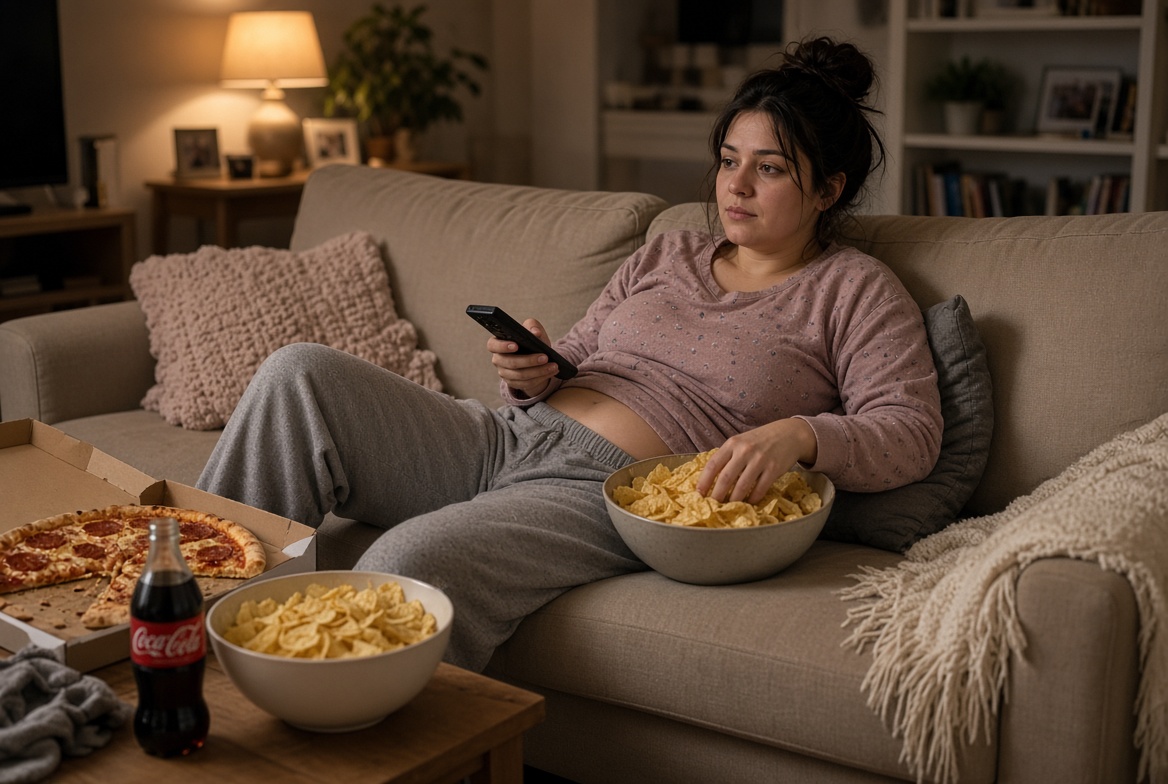
NYT: We Live in an Ultraprocessed World
NYT: We Live in an Ultraprocessed World
NYT: There’s a Good Reason You Can’t Concentrate
NYT: There’s a Good Reason You Can’t Concentrate
Junk food is bad for your body, junk stimuli is bad for your brain.
Most of us know that food products engineered for immediate pleasure rather than long-term nourishment should be no more than an occasional indulgence. But because instinct tells us that fat, sugar and salt mean escaping starvation and death, ultraprocessed foods now account for the majority of calories in the American diet.
Our media diet is no different. “Much of the digital content that ensnares our attention in the current moment is also ultraprocessed,” the computer scientist and contributing New York Times Opinion writer Cal Newport has observed…
Not all ultraprocessed food is detrimental. A daily vitamin is an ultraprocessed food. Not all ultraprocessed media is bad, but it’s worth thinking about mental nutrition.
“What is a TikTok video,” he asks, “if not a digital Dorito?”
People used to unwind at the end of the day, by watching a few hours of television. Was that the brain equivalent of cooking a Costco Detroit-style pizza for dinner? By the way, those are excellent.
Reading a book or newspaper would have been better.
What do people do to unwind now? Scroll shorts on Youtube, or get stuck on social media. That has to be like opening the refrigerator with no plan, and coming out with a Hot Pocket.
A half-century ago, the philosopher Robert Nozick proposed the following thought experiment. Imagine a future in which psychologists “could stimulate your brain so that you would think and feel you were writing a great novel, or making a friend, or reading an interesting book.” All the while, “you would be floating in a tank, with electrodes attached to your brain. Should you plug into this machine for life, preprogramming your life’s experiences?”
That’s The Matrix. Do you want the red pill or the blue pill?
Nozick thought that few of us would choose to plug in. It is our nature, he said, to “want to do certain things, and not just have the experience of doing them.” We want to “be a certain sort of person,” Nozick said, not some “indeterminate blob” floating in a tank.
Nobody is going to say they want to be a floating blob, but people are really lazy. How else do you explain instant rice?
Instead, give a medical excuse for why being a floating blob is the only option available. Alternatively, deny being a floating blob and pretend that social media is actually social or that watching smart people talk is the same as thinking.
Sci-Fi author, Terry Pratchett used to say, “I’d rather be a rising ape than a falling angel.”
We are all on the ape-angel continuum, and constantly making choices. Try to do better.
The Amish explicitly choose what technology enhances their lives. They drew the line a hundred years ago, but at least they think about it.
A friend still has a flip-phone and has no social media accounts. He believes those would be bad for him. He’s probably right, but when he buys a new car, he will be screwed. They want you to have a smart phone.
It’s like not going grocery shopping when you are hungry. To me, every bag of Doritos is a single-serving size, so I don’t buy them.
Take care of your brain. Consider what you feed it. Jefferson Airplane covered this sixty years ago.
Leave a Reply