Two years ago today, a George Washington-level miracle or good fortune saved presidential candidate Trump from being assassinated.
How did the Secret Service get so shitty? It must have taken decades to degrade so thoroughly. You’d think every president would make sure the Secret Service upheld the highest standards.
The final report of the incident by the Department of Homeland Security, Office of the Inspector General, explains what went wrong and how to fix it.
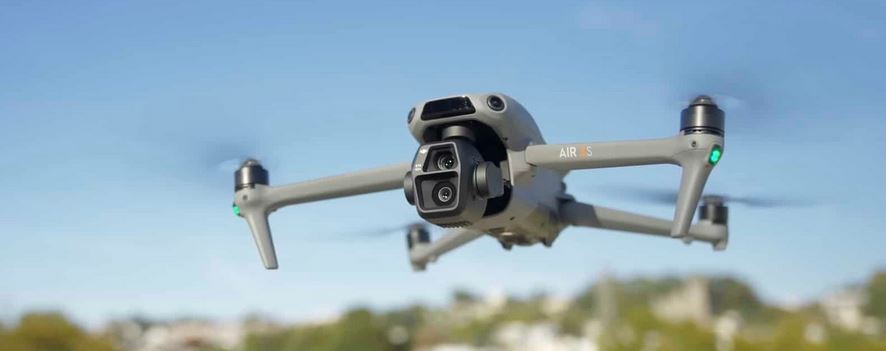
That afternoon, the assassin, Thomas Crooks, flew a drone over a crowded event to survey the area. The Secret Service had no idea. That’s nuts.
The lead TSD agent told us the TSD member denied his request because TSD had already assigned counter drone operators to the Republican National Convention, which occurred from July 15, 2024 to July 18, 2024.
The Secret Service has a Technical Services Division (TSD). They would not provide a counter drone operator because Republicans had already used up their quota of drone protection.
The Secret Service provided Donald Trump with his own protective division. That’s the (DTD). With no help from Central Office, they had one of their guys run their drone.
In addition to being the only counter drone operator assigned to the Butler campaign event, the DTD counter drone operator was also less trained than his TSD counterparts, and when the counter drone system malfunctioned during the event day, he could not repair it without assistance.
Commercial drones are very sophisticated. They have GPS, so the drone can hold station in one spot regardless of wind. Before a commercial drone will even power up, it has to be updated with current flight restrictions. The FAA can establish no-fly zones. Drone software doesn’t allow the aircraft to fly in restricted areas, exceed maximum altitude limits and violate other FAA regulations.
Restricted areas would be flight paths around airports, or over prisons or government buildings. Parts of the Cleveland Metroparks are restricted.
Later that day, FAA approved a temporary flight restriction over the Butler Farm Show on July 13 from 4:20 p.m. to 6:15 p.m., the expected time that President Trump would be at the event.
Crooks flew his drone from 3:51 p.m. to 4:00 p.m., while the counter drone system was
inoperable.
Why did the FAA provide such a small time interval for the temporary flight restriction?
If Crooks couldn’t fly his recon drone, he might have gotten spooked, and decided not to make his assassination attempt. If his drone had been detected, the Secret Service may have been more alert to a threat.
Trump’s protective division, the DTD, had a drone and a guy who was supposed to operate it, but he wasn’t trained to TDS standards. Trump had already been president for a term, and he did many rallies and campaign events. There was an obvious need for a highly competent drone operator as part of his protective division.
The supervisor overseeing DTD’s counter drone operations told us that instead, operators learn by shadowing experienced operators assigned to events. However, the July 13, 2024 event’s operator said he never shadowed anyone before the event.
Instead, another operator provided him “informal training” on setting up the counter drone system, but no training on troubleshooting. The operator who provided this training said it lasted 20 minutes.
I would provide more training than that before I’d let you fly my drone.
DTD policy also instructs counter drone operators to test the system the day before an event, but the July 13, 2024 event’s DTD counter drone operator told us he was unaware of this instruction. The supervisor overseeing DTD’s counter drone operations said this policy is in a “shared [electronic] drive,” and counter drone operators “could go in” the drive to access the policy, but the supervisor could not provide any evidence he informed the operator of the policy.
An organization can have a policy, but that doesn’t guarantee compliance. A new policy will be issued requiring the supervisor to inform the operator, but that isn’t the same as having a dedication to excellence.
Because the operator did not test the system the day before the event, he did not know it was malfunctioning until he tried to turn it on after 10 a.m. the day of the event. Once the operator realized the counter drone was malfunctioning, he contacted the counter drone program leader for assistance. The program leader suggested troubleshooting techniques that did not fix the issue and told the operator to call the counter drone system’s vendor.
Imagine life for this drone operator. He was probably a young nerdling who made it into the Secret Service and is now on the detail to protect a former and possibly future president. He was on a team with several dozen other agents, and it was his job to take care of the drone.
The operator thought he was killing it by firing up the drone six hours before show time. He didn’t know that he was already a day late on testing the equipment. Like I said, modern drones are sophisticated. The report doesn’t mention the malfunction, but typically a drone needs a software update before it will activate. Based on the location, WiFi may not have been available so the controller could not download the necessary software update.
The operator has one job, and it ain’t working. He calls the head of the Secret Service drone program, but it isn’t an easy fix. That guy hangs him out to dry.
During my engineering days, I spent months onsite for automation installations. Troubleshooting was expected. Occasionally, an urgent situation would occur when the system shit-the-bed just when a corporate big shot was coming out for a demonstration. In those situations, I would call the office and expect a five-alarm response.
Everyone understood that I was standing out in a factory, with a bunch of people asking me questions and a bunch of other things going on. Also, it was understood that if the system performed poorly, nobody cared about me, the company would look bad.
This operator was standing out in a field, and if this drone doesn’t start flying, he looks like an asshole. The ramifications could be, and almost were, much worse for the Secret Service and the country.
He did his best. He called the drone company customer support.
- At 12:12 p.m., the operator called the vendor but failed to reach a technical support representative.
- At 1:11 p.m., the operator called the vendor and spoke with a technical support representative, who began troubleshooting the system.
- At 3:04 p.m., the technical support representative emailed the operator stating, “I need to escalate this matter to a specialist to further investigate[…]I’ve marked this matter as high priority[…]but[…]we have limited support during the weekends.”
- Between 3:51 p.m. and 4:00 p.m., Crooks flew his drone.
- At approximately 4:20 p.m., the vendor determined that the system’s ethernet cable was broken. Based on information from the vendor, the operator replaced the broken ethernet cable with an ethernet cable from President Trump staff’s audiovisual booth,
which fixed the counter drone system. - At 4:29 p.m., the counter drone operator turned on the counter drone system and began his counter drone detection responsibilities.
Since the operator was a part of a traveling security detail, he probably calls his wife each evening.
“How’d it go at work today honey? Just kidding, it’s already been reported by every news bureau on Earth. Just so I can steady myself, are you being fired, promoted or indicted?”
The report makes several recommendations, but none of them will correct for a half-assed institution. Eight Secret Service people were suspended. The head of drone operations, the guy who didn’t support the operator, should have been stripped of rank. The operator seems to have good instincts.
It takes leadership with a clear sense of purpose to rehabilitate the Secret Service. On the left is the director of the Secret Service when Trump was nearly shot in the face. On the right is the current director.
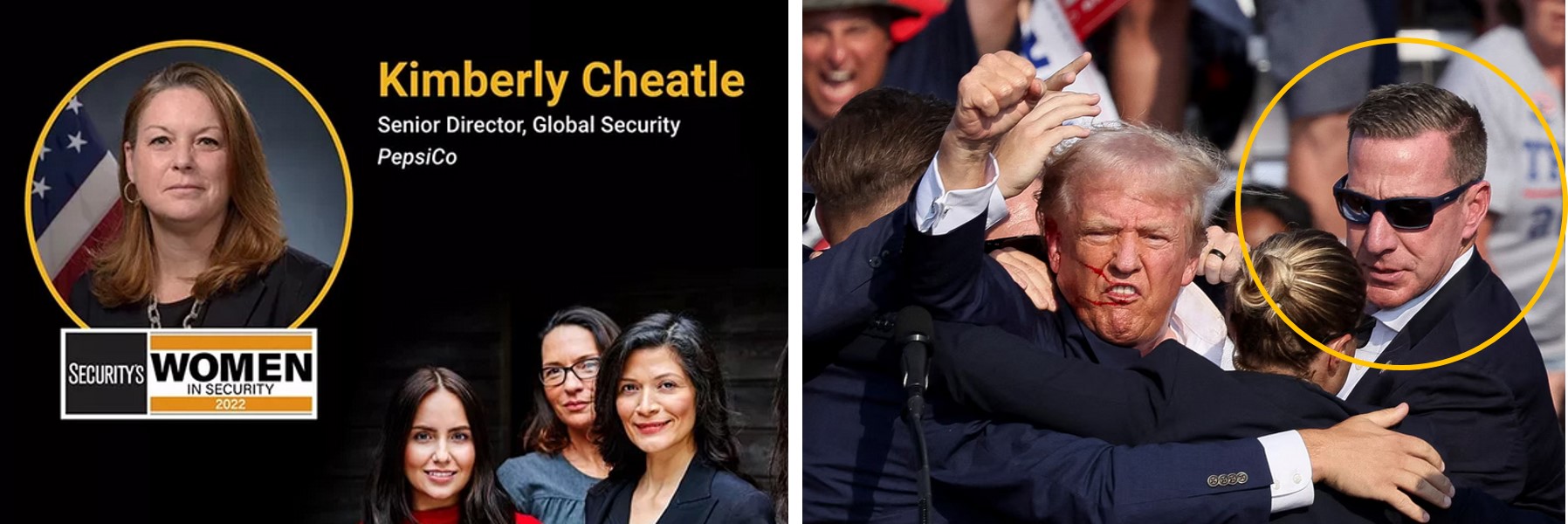
The organization will get back on track.
Leave a Reply