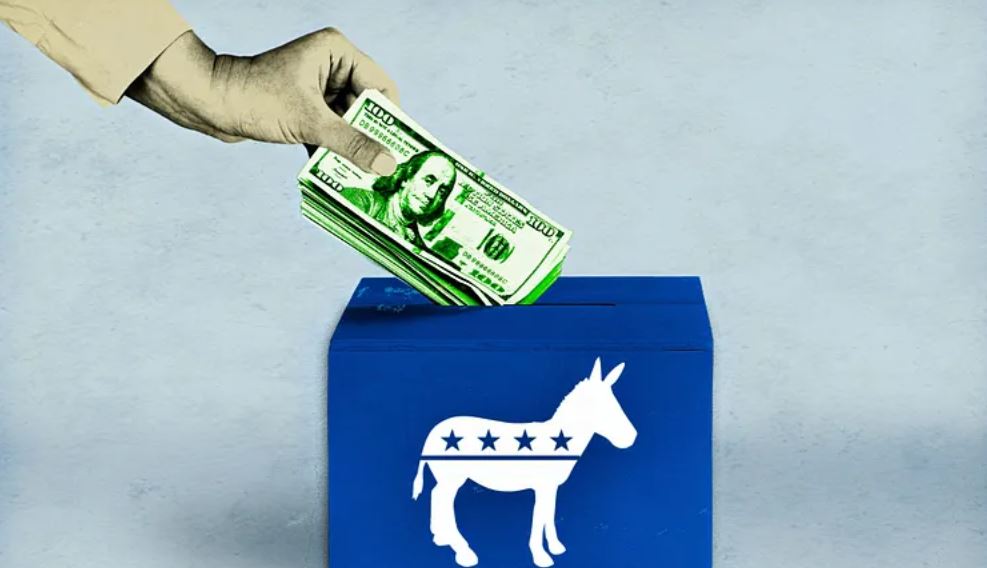
Free Press: How Teachers’ Unions Became Political Big Spenders
A new report claims national teachers’ unions are operating more like Democratic funding machines than groups advocating for their rank and file.
None of this is new information.
A senior adviser to the Trump administration told The Free Press that the Department of Education “will be looking at this report very closely and if warranted, we will investigate further.”
Maybe something will come of this, but none of this is new and has been going on for decades. Since the Supreme Court’s Janus decision, teachers can’t be compelled to join the union or pay ‘fair share’.
The NEA and the AFT are the two largest teachers’ unions in the country, representing around 4.6 million members across the country.
Until very recently, the presidents of the NEA and the AFT were members of the DNC. That is, they were in leadership positions in the Democratic Party. That is a less known and more shocking than their political contributions.
During this most recent fiscal year, the NEA reported $51.7 million in political activities and lobbying, in addition to $123.3 million in contributions, gifts, and grants.
I was not a member of the teachers’ unions at Normandy or North Royalton. Until the Janus decision, I paid a ‘fair share’ equal to union dues. Each year, the OEA sent me an audited report breaking out political contributions. I would then send an ‘objection letter’, resulting in a refund of the portion of union dues that went to political contributions.
The political contributions by the NEA, OEA, NEOEA and local union, amounted to about $140 per year. Union dues were about $750 per year. The amounts in this report match up with my experience.
As unions continue to spend a large portion of their money on political advocacy, the substantive gains for teachers have been diminishing. Over the last two decades, the average teacher salary has fallen by more than 6 percent, from $75,000 to $70,000. During the same time period, per pupil spending rose 25 percent.
Plaut, the New York City teacher, said that “when a union stops prioritizing members and spends the majority of dues on things other than teachers’ needs, the obvious effect is that the members suffer. And we are suffering.”
This is a common misconception. The union does not prioritize members, but prioritizes membership. If teacher pay dropped by 6%, while the number of dues-paying union members increased by 25%, then the union is doing exactly what was intended.
With the Janus decision, the teachers’ unions should die on the vine.
My local union reps and officials were always very good to me. I, they, and almost every teacher I’ve talked to, wished we could just join the local union, without having to be a member of the regional, state and national unions.
Leave a Reply