Home automation is addicting. Once the window shades in the solarium were automated, I looked for anything else to add to the system. Some people go nuts. If you have looked at a new furnace, refrigerator, thermostat or hot water heater, you see that they can all be web-enabled. I don’t want to go crazy.
Complexity is it’s own problem, so any new feature has to fix an existing issue.
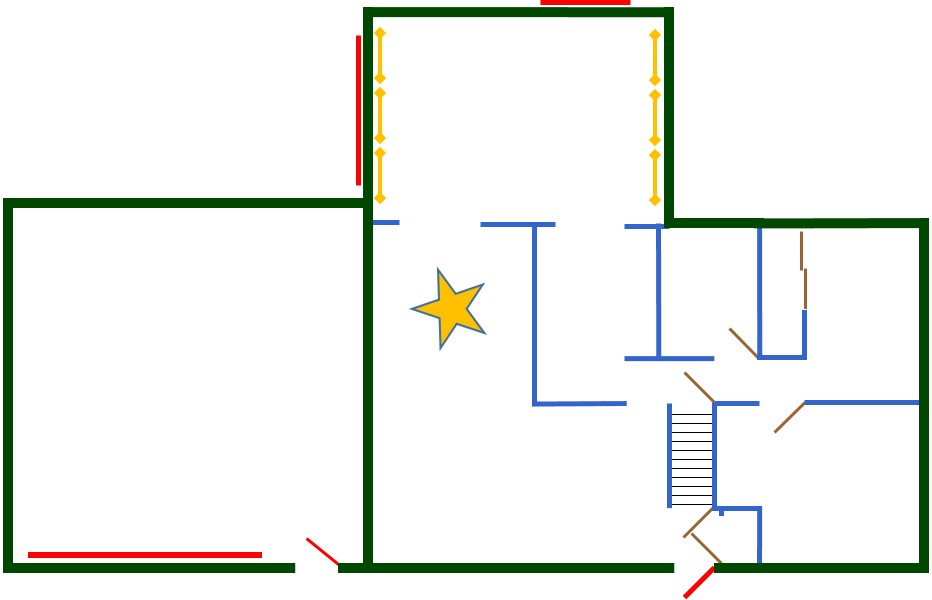
A problem I have is locking up at night. The front door and patio door are easy. Downstairs, there is the garage man door, new garage door and old garage door. If any of those were open in the afternoon, they may still be open or unlocked. It’s easy to go to bed without thinking about it.
Nothing bad has happened when a door is left open or unlocked, but it’s not good.
The goal is not to automate those doors and locks, but to sense that they are open or unlocked. There also must be an obvious way to check the status of the sensors.
There is a chandelier over my dining room table. I don’t like it, but haven’t had a better idea for a dining room light. When friends were going to Columbus, I asked them to get me 5 IKEA TRÅDFRI lights for the chandelier.
Since each of the IKEA bulbs is addressable, it seemed like a good idea to associate each chandelier bulb with a door sensor. When I go to bed, if the bulbs are all off, then the doors are secure.
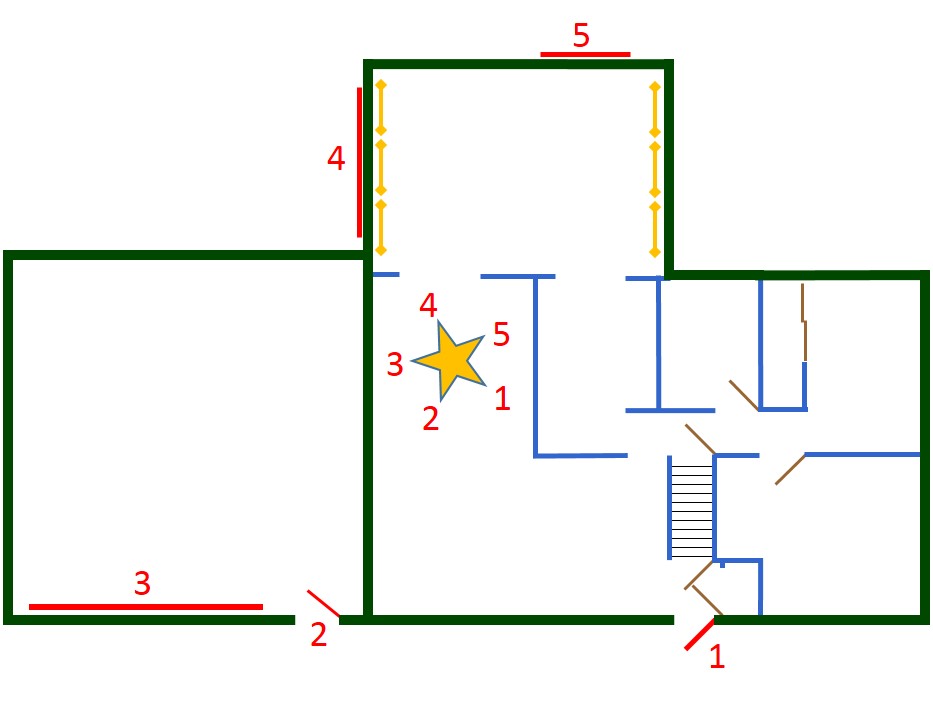
The programming is pretty easy. There are only certain types of sensors available, so that would be the tricky part.
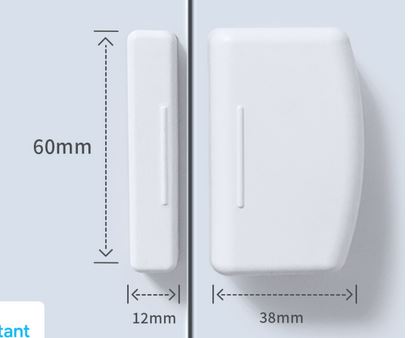
Door and window sensors all have a magnet and magnetic sensor with a radio sending unit built in. That was an easy application for the new garage door. The magnets are tiny, but in a big plastic housing to look fancy. I went with ThirdReality.
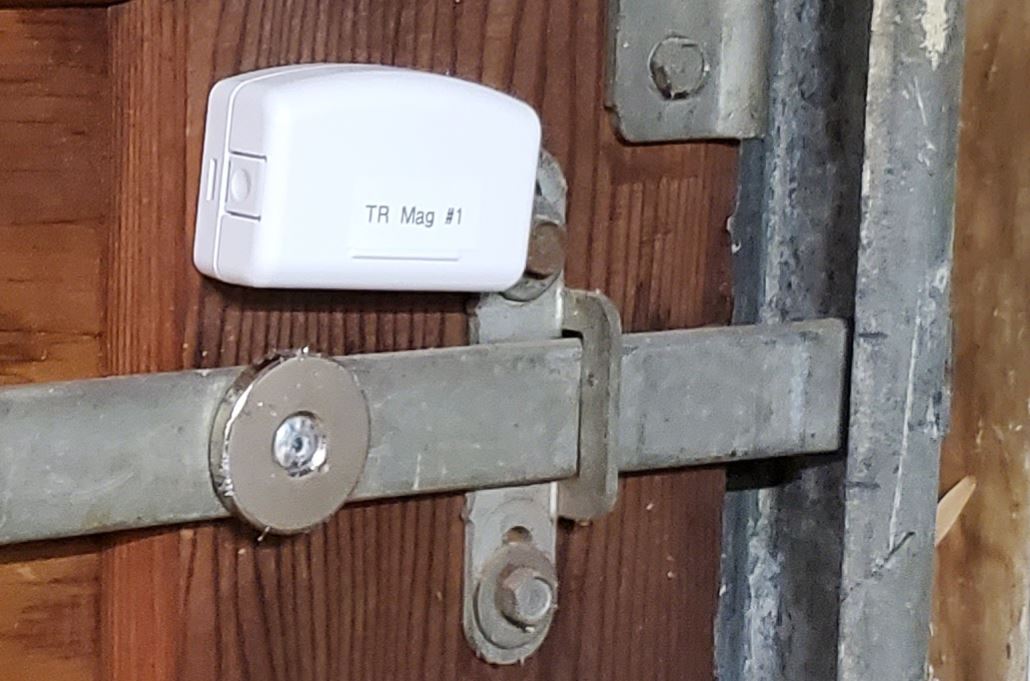
For the new garage door, it was easier to use a round magnet with a hole in it. Those type magnets are pretty useful, so I always have several on hand.

The old garage door, needed to be closed and locked, but the same type of sensor and magnet could be used on the locking mechanism.
The sensor and sending unit are battery powered, and usually last a year or two. If the battery is dead, the door or lock must still be able to operate normally.
There are smart locks available for residential doors. They have key pads, thumb scanners and key holes. My home automation should be unobtrusive, so I didn’t want those.
For the garage man door, I went with an expedient use of the same magnetic sensor. I pulled the little magnet out of the plastic housing, and glued it to the deadbolt knob.
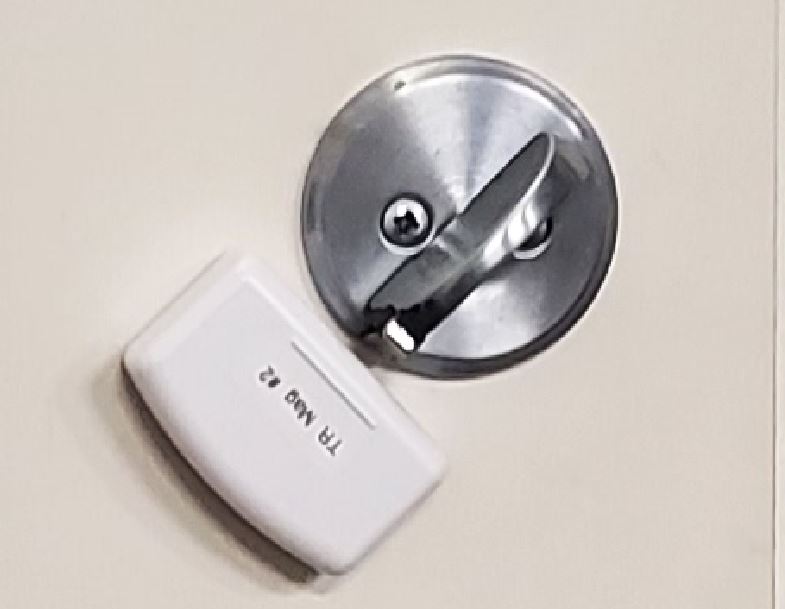
I am not proud of that, but starting to think it’s the best way to go. The sending unit doesn’t interfere with anything, and the operation is simple. The glued on magnet isn’t great. I may try again with a smaller magnet screwed to the knob.
The front door lock was more difficult because the deadbolt uses a key on each side. I went experimental with this one.
The market in home automation is for complete solutions. Nobody sells individual components so the tinkerer can piece together a custom job. Nobody sells just the sending unit so the user can add any type of switch or sensor.
Sonoff sells a water leak sensor. It has two exposed pins that detect water when a current can pass between them.
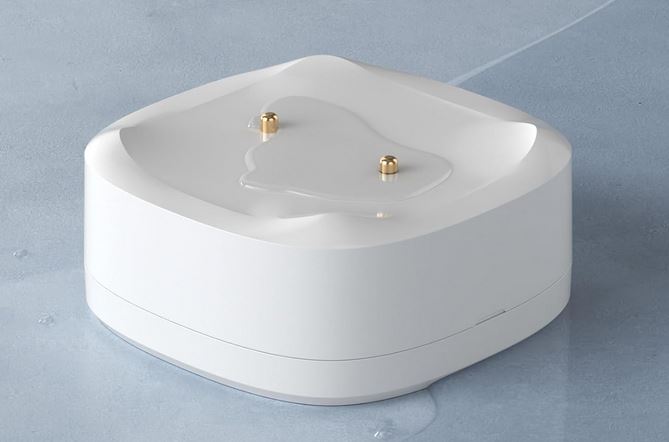
That was used as the sending unit. By dismantling the water leak sensor, the pins could be removed and wires soldered on to the control board. When a switch connects the two wires, a message would be sent to the home automation system.
There is a little bit of room in a door between deadbolt components. Modifications were made so the deadbolt lock closed a switch.
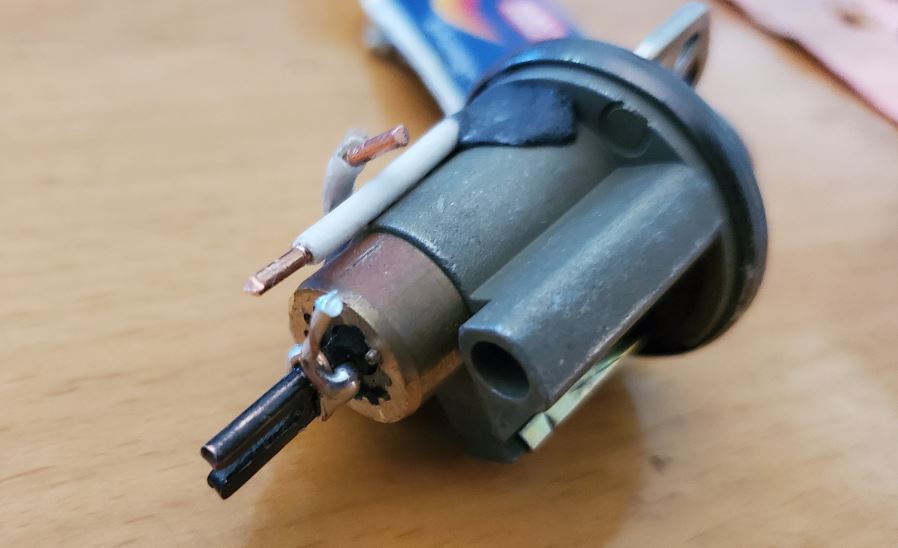
When turning a deadbolt, there is a hard stop. The little wires I added bend just a little to make contact. Unlocking the deadbolt breaks the connection. It works surprisingly well, and doesn’t look too bad.
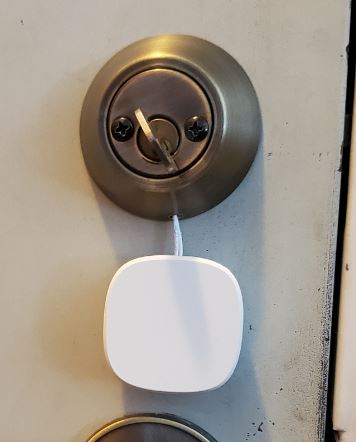
Double-sided tape secures the sending unit on to the door.
The internal switch isn’t an improvement over the magnet switch on the garage man door.
I did not re-key my door locks when I bought this house. You should always do that, but I didn’t. Part of the reason is that the previous owner, Frank, had all the door locks keyed the same. I am not sure how or why he did that.
One key opened the front door, back door, garage car doors and any number of interior doors. The bedroom doors and bathroom door use that key. A person can’t get from the garage to the basement, basement to the first floor or first floor to the attic, without that key. I mean if those doors are locked.
How do you get bedroom doors keyed to a front door deadbolt? I don’t know. The door knobs all look normal for interior doors. Only the closet doors don’t use a key.
Frank was a driven man with many talents. He probably did it himself.
I may get a new lock set to match the new garage man door, and re-key those to match. I will get a deadbolt with an inside knob and use the magnet approach.
Know that I think about it, I kind of want to replace all the interior door knobs.
The patio door has not been sensored yet. That door has a toe pin that secures the sliding door to the track. I ordered tiny neodymium magnets with holes. A tiny magnet on top of the pin should be unobtrusive and not interfere with the operation of the toe pin.

The magnetic sensors are very sensitive, so as I get other bright ideas, these little magnets should be useful.
Did you remember the make shift security alarm we had outside of Sandbaggers building?
Frank, out electrician, hooked a a real authentic air raid siren and placed it in between the overhang and the roof of the club house. It was too loud pointed forward so I had him point it upwards. Then he installed an expensive lightning proof motion sensor that covered the back of the building- the back door and garage- and the side of the building. We also had sensor motion lights underneath the over hang. We had the siren motion sensor hooked up to an electrical timer, this way the motion sensor would be off during business hours. For some reason every time the sensor received power from the light timer at night when the sensor was set to get power the siren would go off for about 2 minutes. The electrician didn’t know if there was a way to fix that. It stayed like that for years and every time the siren went off at night when it received electrical power from the light timer, the coyotes in the back field or woods would start yipping to it. My dog Fritzo would do the same thing when an ambulance would go by except he would howl. So, if an intruder would walk onto the back club house porch or side of the building a motion light would kick on plus the air raid siren. Never had another break in again or evidence of a tried break in after we got that siren.
One time at night I heard it go off. I ran up there with my dog Fritzo, but nobody was there. Sometimes the police would patrol the building and I think it was them
That sounds like fun for the neighbors.