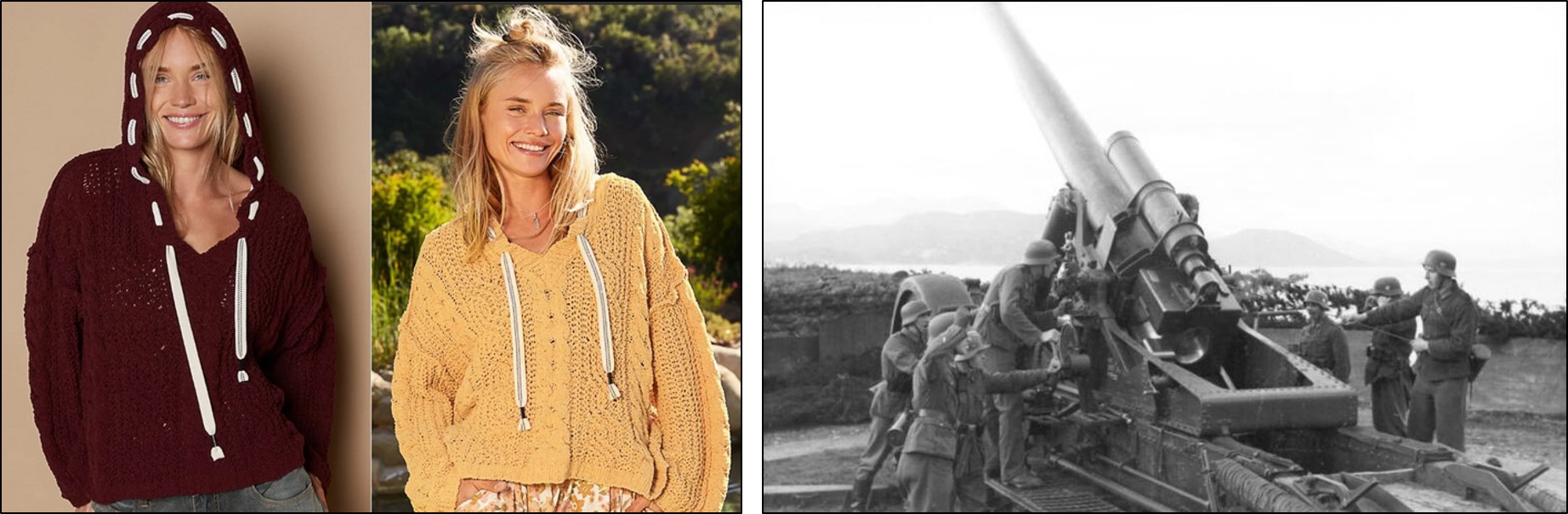
YouGov: Words that men or women are more likely to know
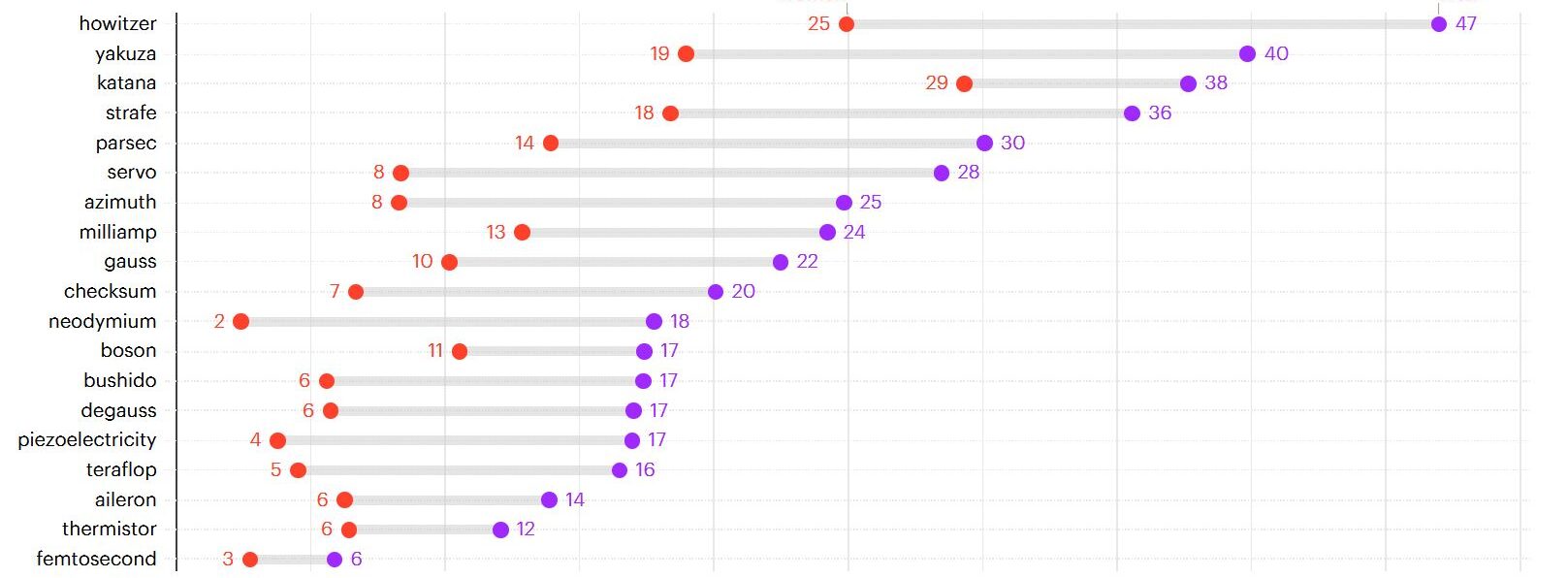
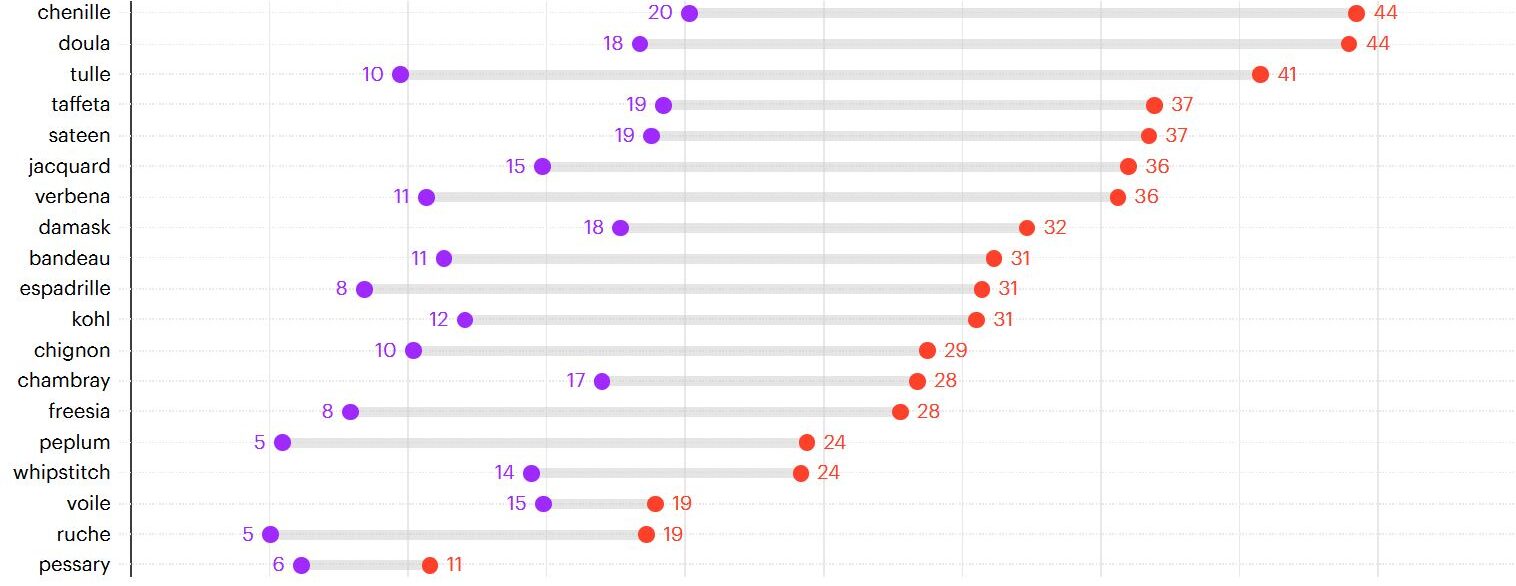
YouGov asked a bunch of Americans which words they knew. Some words were recognized much more frequently by men, and some by women.
Here are the words that men knew more:
aileron, azimuth, boson, bushido, checksum, degauss, femtosecond, gauss, howitzer, katana, milliamp, neodymium, parsec, piezoelectricity, servo, strafe, teraflop, thermistor and yakuza
Here are the words that women knew more:
bandeau, boucle, chambray, chenille, chignon, damask, doula, espadrille, freesia, jacquard, kohl, peplum, pessary, ruche, sateen, taffeta, tulle, verbena, voile and whipstich.
YouGov did not ask the surveyed people to define or explain the words.
I could give an explanation for all of the guy words, except for ‘boson’. I’ve heard it as a nautical job title, ‘boson’s mate’, but that’s about it.
For the gal words, I have a few vague associations. From ‘Jacquard loom’, that’s probably a fabric. Taffeta and tulle are also. I’ve heard of damask china. A doula might be a midwife. I’ve no idea about the rest.
Here are the results from YouGov:
If I were still teaching, this list of words would be a good diversion for my class.
Students don’t really want to be dumb. They know that people make fun of the dumb guy. They just don’t believe the lesson being taught is going to ever be relevant. Students like to be taught ‘the old wisdom’, or things that smart people know, or anything that puts them in the savvy group.
At NoRo, we had a business teacher who had ‘formal Fridays’. It was a short bit at the end of the week about comportment, manners, professionalism or other things that fancy people knew, but nobody ever taught kids like them. It might be how to shake hands. Students love that kind of shit because nobody wants to be a dope.
I held this teacher in high esteem because she came up with shit like this that provided additional value to her students. Sadly, she went into administration and quickly learned to just follow orders, and abandoned things she knew to be true. How did she live with herself?
In my class, we occasionally had some time because an activity wrapped up early. I generated a cultural literacy activity that consisted of a short Powerpoint with photos of five people that smart people recognize. The students were to write down the name of the person, then afterward, we’d discuss who the person was and why the person is notable. People might be Mark Twain, Amelia Earhart, Mother Theresa or Bruce Lee. I’d chose photos that gave some context, but not too much.
Amelia Earhart needs the cap and goggles, but not the airplane. Like that.
Students enjoyed it. A worldly kid who isn’t good at physics, might be good at this. If I show a person that a student admires, then we have a little connection. If a grade-grubbing student doesn’t know any of them, then the student may read up on them or try to get more broadly informed.
I call it “value added education”. NoRo had an English teacher who was intelligent and curious. I used to say that he, and the head of maintenance, were the only people I’d trust to take over my physics classes. He called it the “hidden curriculum”. Nothing nefarious, just things to know that will help in life, but aren’t in the curriculum.
The YouGov survey is like that. I’d want students to provide an explanation or description for each word, rather than just, “yeah, I know what that is.”
IRL, the student is never going to be asked to define tulle or yakuza, but it’s better to follow a conversation, than to be baffled.
Leave a Reply