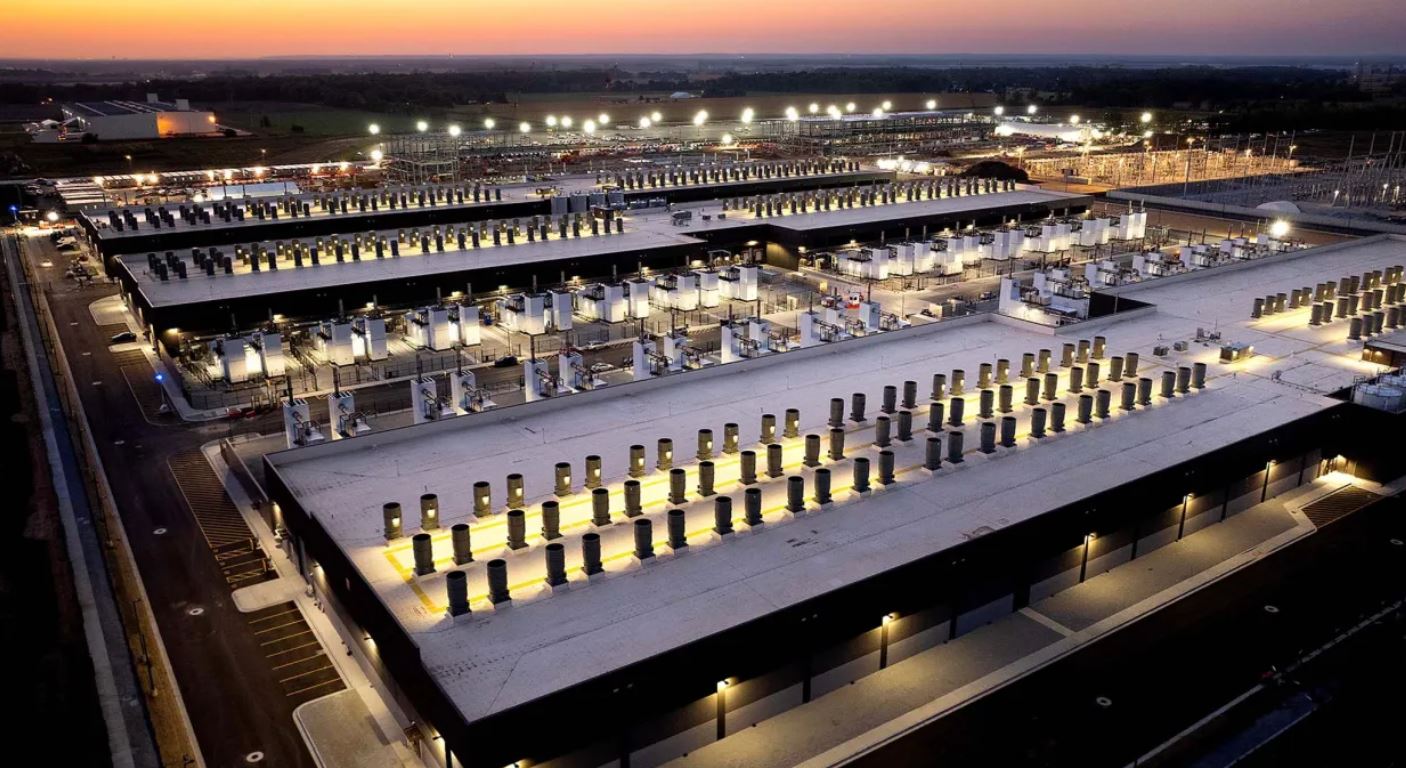
NPR: Data Centers are expensive, unpopular and could be a tipping point in the midterms.
I enjoy NPR because they think it’s plausible that data centers could influence the midterm elections. Data centers are not a tipping point, but are a big deal that smart people should be thinking about. So far, it seems like dimwits are just scrambling for cash. What gets done will effect normal people like us.
When the power goes out, the worst part is the boredom from lack of internet access. Some people get that when their phone can’t hit the net. We really like the internet, and the internet really needs a shit load of servers. AI needs even more.
Committed NPR listeners are in a doom spiral about AI. A progressive friend is worried that AI will put all the truck drivers out of work. I didn’t even know he liked truck drivers. AI will alter career prospects, but not so much for physical jobs. The creative types who may not be very intelligent, but have a college degree earned in the age of grade inflation, may become redundant. The NPR crowd.
So far, AI is fine. My sister uses it to make anthropomorphic pictures of dogs and cats. My engineering nephew uses it to generate illustrations of monsters for D & D. I’ve used it to generate illustrations and software. We aren’t paying for the technology.
The internet and AI rely on a bunch of servers and other hardware, but who is paying for all of that? I don’t know. This vanity blog only costs me about $8 per month, and I get unlimited storage. I am not permitted to store large backup files, but so long as the files are used for something, they don’t care. I could generate tons of AI video slop, and they’d be good with that.
At some point, the companies that provide all of the free cloud storage for email, pictures and video, may decide to start billing once we all rely on them. They haven’t, but it’s a good idea to have local backup.
One article says that 87% of venture capital is going to AI, and notes that 40% was going to dotcom companies when that bubble burst. This may be an AI bubble, but like dotcom companies, when it bursts, we still need somebody to fill that niche. We do need data centers.
Data centers need:
- Electricity. A lot of it. Enough to suck up the local supply and increase electric rates to the rest of us.
- Room to build. These are big, warehouse-looking, utilitarian industrial parks.
- Robust communication. AI works with data, and that has to move to the people who use it.
- Heat dissipation. All that electricity generates heat, and it has to be dumped somewhere. That probably means water.
Elon Musk wants to build data center in space.

Alexandria Ocasio-Cortez isn’t even smart for a congressman. Elon Musk is a once-in-a-century technology genius who can generate innovations and manage the implementation to change entire industries. He is an Archimedes, Newton or Tesla. Like those guys, all of his ideas are not gold.
Newton was also active in studying the occult and metaphysics.
Nikola Tesla wanted to build a camera to project thoughts on to a wall.
Musk hasn’t proposed anything as crazy as those guys, but they lived in a different era. Electric cars are a limited solution, not practical for majority of drivers, but he built that market. The limitations have become obvious, so that market is shrinking with the absence of government subsidies.
Elon Musk must have known the practical limits to electric cars. Some suspect that all of his innovative companies are geared toward life on Mars. It’s not practical to build data centers in orbit.
- Electricity. It’s different in space, but a solar panel might be able to generate 500 W per square meter. A small, satellite data center might need 5 Megawatts, so would need 10,000 square meters of solar panel. That is about two football fields of solar panels. There is a lot of space junk orbiting the Earth, along with micro-meteors passing through.
- There is plenty of room to build, but everything needs to be taken up to orbit.
- Communication is possible, but latency and data speed might be a problem. Starlink satellites orbit at an altitude of about 400 miles. Geosynchronous satellites, like for satellite TV, such as DirectTV or Dish Network, are 22,000 miles high. Lag time, or latency, is relevant to some applications. Since the data is transmitted by radio, bandwidth would also be an issue for large files. In a home, WiFi tops out at 1 Giga-bit per second, while Cat 6 ether net is 10 times faster.
- Heat dissipation is a big problem in the vacuum of space. Deep space has a little heat left over from the Big Bang, but it’s 455o F below zero. Even though it’s only a few degrees above absolute zero, sloughing off heat is difficult. Moving heat through convection and conduction requires a substance to absorb that heat. Those aren’t available in a vacuum. The only way to move heat is by giving off infrared light. It works, but requires a lot of area to radiate.
There are good solutions to the data center problem, but nobody seems to be talking about them. I live in a nice suburb, and wouldn’t want a bleak industrial building the size of a city park, that doesn’t employ anyone local and drives up utility rates.
The electricity problem is easy. Modular nuclear reactors are ideally suited to data centers. They are expensive, but provide constant baseline power. The local utility could provide or accept electricity as needed.
Room to build should not be difficult. There are plenty of places that are wide open, and not particularly attractive or productive.
Robust communication can be addressed with fiber optics to major cities.
The heat dissipation issue is interesting. Location to water is usually mentioned, but dumping massive amounts of heat into a body of water is going to have environmental impacts. In many sparsely developed regions of the world, heat is a resource. Iceland, Greenland, Siberia, and most of Canada or Alaska could use waste heat for greenhouses or residential heating.
It just doesn’t seem that difficult.
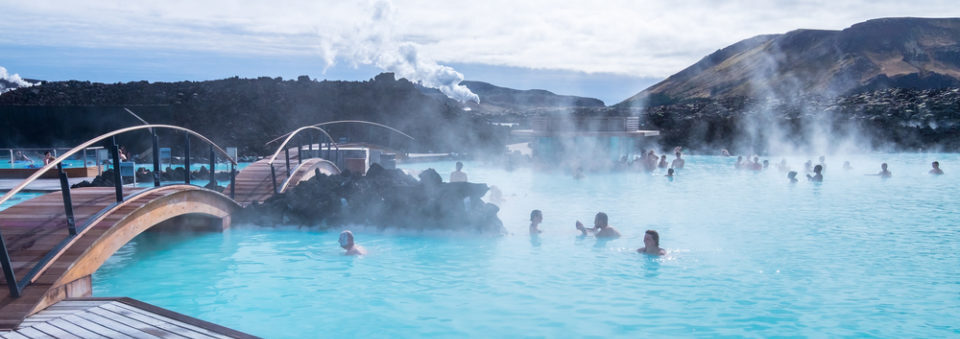
Hey Fargo, your average temperature is below freezing for five months per year, but your soil is so good, you are an agricultural powerhouse. How about we add a data center, drop in a modular nuclear power plant and surround the site with greenhouses. We need an additional heat sink anyway, so the community gets a thermal spa similar to the Blue Lagoon in Iceland.
Leave a Reply